
How to use Microsoft’s Copilot AI
As AI starts dominates the technology landscape, it becomes more and more appealing to give the software a try, however it can be somewhat intimidatin
OpenAI is poised to enter the custom component business in 2025. The brand is currently in talks with Taiwan Semiconductor Manufacturing Co. (TSMC) to fabricate the first generation of its in-house AI-based silicon, according to an exclusive report by Reuters.
The AI start-up has plans to create custom chips to lessen its dependence on AI chips from Nvidia. Sources told Reuters that OpenAI is wrapping up the final design of its chip, which should be complete in the coming months. The company will design the chip in collaboration with Broadcom. The 40-person in-house team is spearheaded by former Google engineering lead, Richard Ho.
Once designs are complete, the company will send them to TSMC for an initial fabrication process called “taping out,” using its 3-nanometer process technology, to ensure that the chip is viable for mass production. If successful, the chip could begin mass production at TSMC in 2026.
While reports of these plans are circulating, neither OpenAI nor TSMC have confirmed that they are designing or collaborating on an AI component.
Even so, Reuters noted that OpenAI striving to mass produce an in-house AI chip in such a short time frame is an ambitious goal. Such a feat is extremely expensive and time-consuming. There is also the possibility an initial tape-out could fail, meaning the company would have to test for faults and repeat the process.
However, if a tape-out is successful, and OpenAI is able to develop its first in-house AI chip in a snappy schedule, the company will have completed a feat similar organizations have not been able to achieve. The brand would have “a strategic tool to strengthen OpenAI’s negotiating leverage with other chip suppliers,” sources told the publication.
After the first chip rollout, the company plans to create more powerful components, with greater abilities version after version, Reuters added.
OpenAI has long had heavy competition with American contemporaries in the AI space. However, the introduction of the Chinese start-up, DeepSeek, with its open-source platform has really shaken up the industry for all involved. CEO Sam Altman recently indicated that the company’s former strategy of being a closed-sourced business is a thing of the past.
The brand has taken some swift moves in response to the dark horse, DeepSeek, in aligning itself with U.S. President Donald Trump’s $500 billion Stargate infrastructure program. Reports also indicate OpenAI is close to closing a $40 billion deal with Japanese investment firm, SoftBank. The company also recently announced a new visual rebrand. In addition to recent product launches, including o3 mini reasoning model and the Deep Research feature, the brand aired its first television commercial at the 59th Super Bowl on Sunday.
Despite its efforts to develop AI chips quickly, the company remains very much in start-up mode. Sources told Reuters even if OpenAI is successful at developing and mass-producing its own chips, the components would have a limited function within the company. They would mainly be used for running AI models, whereas the brand also requires chips for training AI models.

As AI starts dominates the technology landscape, it becomes more and more appealing to give the software a try, however it can be somewhat intimidatin

In a showcase of where audio tech is headed, Soundcore, the premium sub-brand of Anker Innovations, took the stage at Microsoft Build 2025 this week w

OpenAI has established a free public resource called ‘OpenAI Academy,’ geared toward providing AI education to all knowledge levels.Among the free off

Apple’s efforts in the health segment are a class ahead of the competition. But more than just racing ahead with innovation, the company has taken a m

OpenAI’s flagship service ChatGPT remains as popular as ever, with the brand having hit a 500 million active user milestone in recent days amid the St

Amazon is taking some inspiration from the TV shows available on its Prime Video streaming platform, and porting it over to Kindle e-readers to keep u
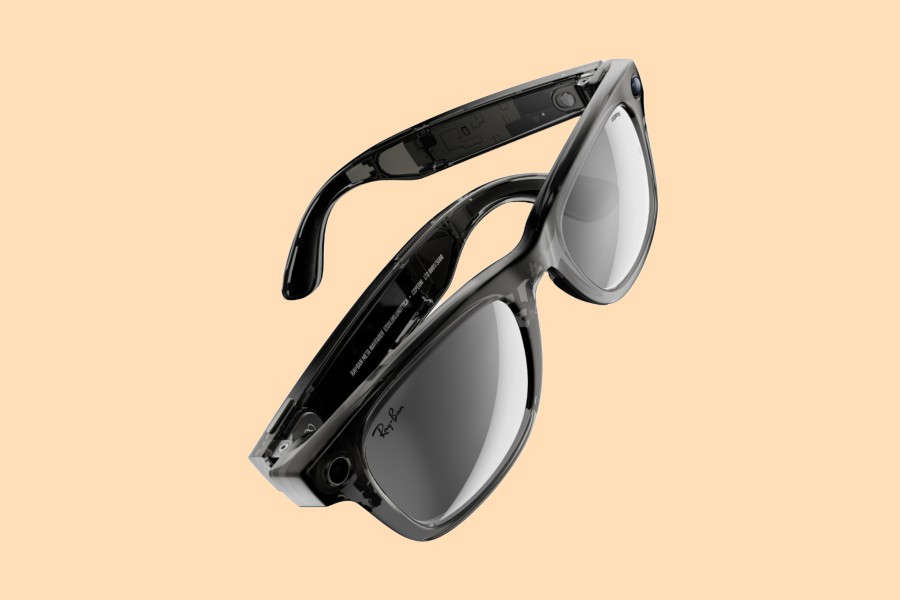
Meta delivered an unexpected runaway success with its Ray-Ban Stories smart glasses, and now, it is headed to the runaway for the latest take. At the

Pixabay / PexelsGoogle will continue to go all in on AI in 2025, CEO Sundar Pichai announced during the company’s Q4 earnings call Wednesday. Alphabet
We are a comprehensive and trusted information platform dedicated to delivering high-quality content across a wide range of topics, including society, technology, business, health, culture, and entertainment.
From breaking news to in-depth reports, we adhere to the principles of accuracy and diverse perspectives, helping readers find clarity and reliability in today’s fast-paced information landscape.
Our goal is to be a dependable source of knowledge for every reader—making information not only accessible but truly trustworthy. Looking ahead, we will continue to enhance our content and services, connecting the world and delivering value.