
GPT-4o is back on ChatGPT; OpenAI relents following huge backlash
OpenAI, the makers of ChatGPT, have performed something of an about-face after fans were upset that it deleted the older models to only allow users to
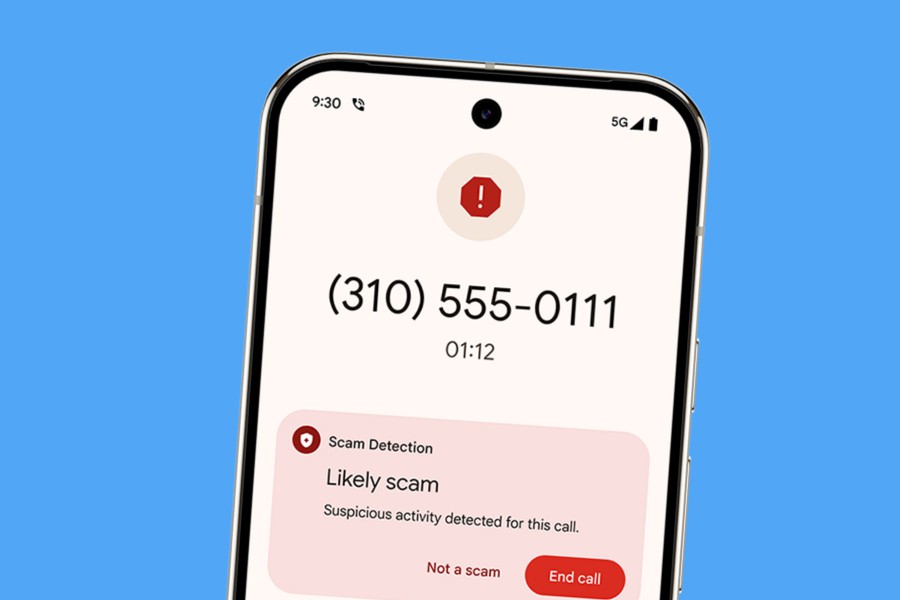
Over three months ago, Google started beta testing a new safety feature for Pixel phones that can sense signs of a fraud in voice calls using AI analysis. Today, Google has officially launched the Scam Detection feature for calls, alongside a similar con-screening system for messages.
Every year, smartphone users lose millions of dollars to elaborate schemes across the world. The problem is so rampant that the US Office of Inspector General and the Federal Trade Commission have published guidelines on recognising and reporting such deception.
To look for signs of scam in an ongoing call, Google is pushing the natural language understanding of on-device Gemini Nano AI on Pixel phones. The AI will listen to the ongoing telephonic conversation in real time, and if it detects a risky pattern, an alert will pop up.

Users will be notified via an audio cue, haptic feedback, as well as on-screen notification that the caller is likely trying to dupe them. Google says it worked with financial institutions to study the most common patterns employed by bad actors.
For example, if the caller is trying to extract sensitive details such as banking information, coaxing users to install an app, offering freebies, or tries switching to another communication platform, the Scam Detection system will kick into action and raise an alarm.
Google says it is rolling out Scam Detection in call for all Pixel 9 series users in the US, starting with support for English language. The company tested this feature with other AI models on older Pixel phones, as well, but found the approach to be less effective compared to on-device Gemini Nano AI.
Scam Detection will only be activated for unsaved numbers, and no audio recordings are saved or passed through cloud servers. It’s a fully on-device implementation. This feature is off by default, and it can be disabled mid-way through a call, as well.
The idea is to proactively look for problematic patterns, if the first line of defense such as spam call blocking fails. “Traditional spam protections are focused on protecting users before the conversation starts, and are less effective against these latest tactics from scammers that turn dangerous mid-conversation and use social engineering techniques,” says Google.

The Messages app by Google already offers a robust suite of spam reporting tools. It is now landing support for Scam Detection, as well, just the way it has been implemented for voice calls.
Google says the on-device AI will keep an eye on SMS, MMS, and RCS conversations, and will alert users as soon as it detects risky chat patterns.
All the chats are analyzed on-device, and only when users to choose to flag the sender as fraudulent that the scammer’s details and messages are shared with Google and carriers.
Unlike its calling counterpart, Scam Detection in Messages is enabled by default, but it can be turned off at any given point in time. This feature is rolling out more broadly to English-speaking users in the US, UK, and Canada.

OpenAI, the makers of ChatGPT, have performed something of an about-face after fans were upset that it deleted the older models to only allow users to

In what’s believed to be a world first, artificial intelligence (AI) has allowed a slain man to address his killer at the sentencing hearing.Christoph

Nearly two billion people across the world suffer from a blood condition called anemia. People living with anemia have a lower than average number of

You may have occasionally joked about how companies these days seem to be falling over themselves to launch something, anything, that has AI, even jus

Google is steadily rolling out contextual improvements to Gemini that make it easier for users to derive AI’s benefits across its core products. For e

ChatGPT didn’t just emerge onto the AI scene, it birthed an entire revolution of AI assistants and agents and made them accessible to consumers who we

Tech for Change This story is part of Tech for Change: an ongoing series in which we shine a spotlight on positive uses of technology, and showcase ho

ChatGPT is becoming more accessible to the masses. Its ChatGPT Search feature is now available without having to log in to the popular chatbot. Parent
We are a comprehensive and trusted information platform dedicated to delivering high-quality content across a wide range of topics, including society, technology, business, health, culture, and entertainment.
From breaking news to in-depth reports, we adhere to the principles of accuracy and diverse perspectives, helping readers find clarity and reliability in today’s fast-paced information landscape.
Our goal is to be a dependable source of knowledge for every reader—making information not only accessible but truly trustworthy. Looking ahead, we will continue to enhance our content and services, connecting the world and delivering value.