
WeTransfer backlash highlights need for smarter AI practices
A recent update to WeTransfer’s terms of service caused consternation after some of its customers feared that it meant content from files uploaded to
Even as OpenAI continues clinging to its assertion that the only path to AGI lies through massive financial and energy expenditures, independent researchers are leveraging open-source technologies to match the performance of its most powerful models — and do so at a fraction of the price.
Last Friday, a unified team from Stanford University and the University of Washington announced that they had trained a math and coding-focused large language model that performs as well as OpenAI’s o1 and DeepSeek’s R1 reasoning models. It cost just $50 in cloud compute credits to build. The team reportedly used an off-the-shelf base model, then distilled Google’s Gemini 2.0 Flash Thinking Experimental model into it. The process of distilling AIs involves pulling the relevant information to complete a specific task from a larger AI model and transferring it to a smaller one.
What’s more, on Tuesday, researchers from Hugging Face released a competitor to OpenAI’s Deep Research and Google Gemini’s (also) Deep Research tools, dubbed Open Deep Research, which they developed in just 24 hours. “While powerful LLMs are now freely available in open-source, OpenAI didn’t disclose much about the agentic framework underlying Deep Research,” Hugging Face wrote in its announcement post. “So we decided to embark on a 24-hour mission to reproduce their results and open-source the needed framework along the way!” It reportedly costs an estimated $20 in cloud compute credits, and would require less than 30 minutes, to train.
Hugging Face’s model subsequently notched a 55% accuracy on the General AI Assistants (GAIA) benchmark, which is used to test the capacities of agentic AI systems. By comparison, OpenAI’s Deep Research scored between 67 – 73% accuracy, depending on the response methodologies. Granted, the 24-hour model doesn’t perform quite as well as OpenAI’s offering, but it also didn’t take billions of dollars and the energy generation capacity of a mid-sized European nation to train.
These efforts follow news from January that a team out of University of California, Berkeley’s Sky Computing Lab managed to train their Sky T1 reasoning model for around $450 in cloud compute credits. The team’s Sky-T1-32B-Preview model proved the equal of early o1-preview reasoning model release. As more of these open-source competitors to OpenAI’s industry dominance emerge, their mere existence calls into question whether the company’s plan of spending half a trillion dollars to build AI data centers and energy production facilities is really the answer.

A recent update to WeTransfer’s terms of service caused consternation after some of its customers feared that it meant content from files uploaded to
OpenAI’s much-anticipated ChatGPT 5.0 is expected to arrive August 7 —and it could change how everyday users interact with AI. While the leap from GPT

As AI starts dominates the technology landscape, it becomes more and more appealing to give the software a try, however it can be somewhat intimidatin

Microsoft may be on its way to developing AI models independent of its partnership with OpenAI. Over time, the generative AI company, OpenAI, has expa

Opera Mini is a mobile browser with a decadeslong legacy that predates the launch of even mobile platforms, including Android or iOS. Its popularity h

Snapchat is bringing generative AI videos to its social platform. The company has today introduced what it calls Video Gen AI Lenses, which essentiall
AnthropicOpenAI’s o3 and DeepSeek’s R1 models have some new competition. Anthropic announced Monday the release of its new “hybrid reasoning” model, C
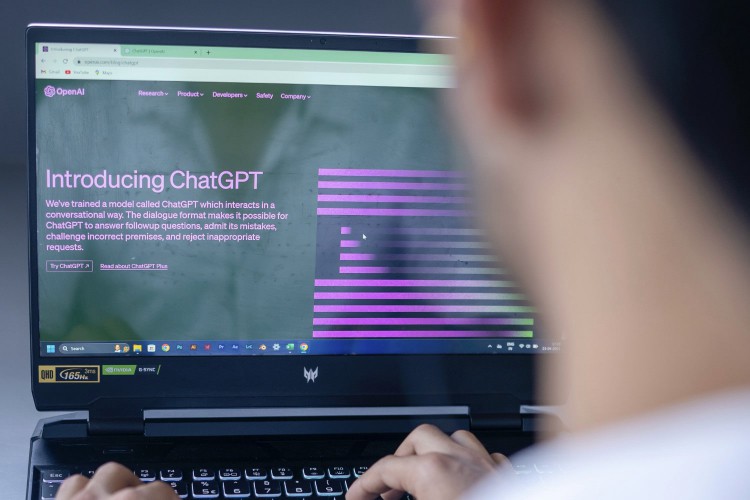
ChatGPT is becoming more accessible to the masses. Its ChatGPT Search feature is now available without having to log in to the popular chatbot. Parent
We are a comprehensive and trusted information platform dedicated to delivering high-quality content across a wide range of topics, including society, technology, business, health, culture, and entertainment.
From breaking news to in-depth reports, we adhere to the principles of accuracy and diverse perspectives, helping readers find clarity and reliability in today’s fast-paced information landscape.
Our goal is to be a dependable source of knowledge for every reader—making information not only accessible but truly trustworthy. Looking ahead, we will continue to enhance our content and services, connecting the world and delivering value.